
There is something curious about lists of the most-read texts. Not the texts themselves. The fact that almost nobody is surprised by them.
Politics. Artificial Intelligence. Technology. Business. Finance.
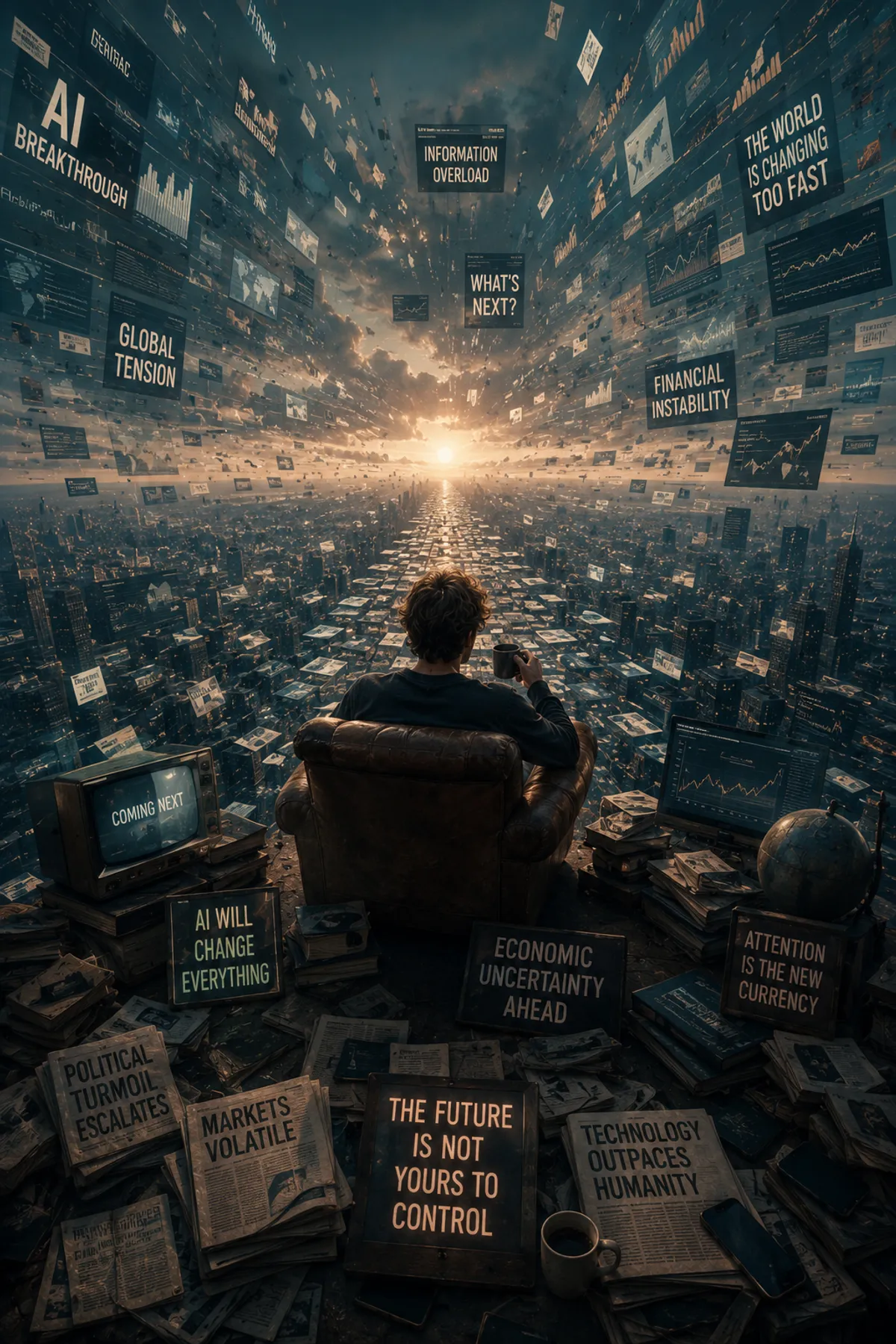
When someone opens Substack’s rankings, it does not feel as though they are discovering the tastes of a society. Rather, they are seeing its anxieties. As if attention no longer moves toward what attracts us, but toward what threatens us.
It is not difficult to understand why. We live in a time in which the future constantly behaves like breaking news.
Something is coming.
A new technology.
A new political shift.
A new economic risk.
A new change that must be understood in time.
And the faster the world moves, the more reading begins to resemble an early warning system.
People do not open texts merely to learn something. They open them to check whether they are safe.
Whether their jobs will remain the same.
Whether their money will retain its value.
Whether their country will look the same a year from now.
In this sense, much of contemporary reading is no longer curiosity. It is monitoring. A constant watching of the horizon.
And perhaps that is precisely why literature has begun to seem like such a strange activity.
Not because it has lost its value. But because it refuses to participate in anxiety. A novel does not inform you about what is coming. Poetry does not analyse the market. A story does not offer a forecast.
They do not reduce uncertainty.
Sometimes they even increase it.
Because good literature rarely makes the world simpler. More often, it does the opposite.
And yet we live in a time obsessed with simplification. With explanation. With clarity. With the feeling that someone, somewhere, is still in control of what is happening.
Perhaps that is why the most-read texts of our time resemble literature so little. And resemble instructions for orientation so much. Like a map that is constantly being updated. Like the weather forecast. Like an airport departures board.
You look at it again and again because you are afraid of missing something important.
And the more closely we stare at that board, the less often we allow ourselves that other kind of reading. Not the reading that prepares us for the world. But the reading that makes us reflect on who we are within it. The difference seems small.
But it is probably along that line that one of the most important cultural fault lines of our time runs.