
There are parables that sound like a joke but end like a diagnosis. “The Man Who Thought He Was Dead” is exactly that – funny until the moment you realize that half the people around you are already lying in the snow with their arms crossed… for no reason at all.
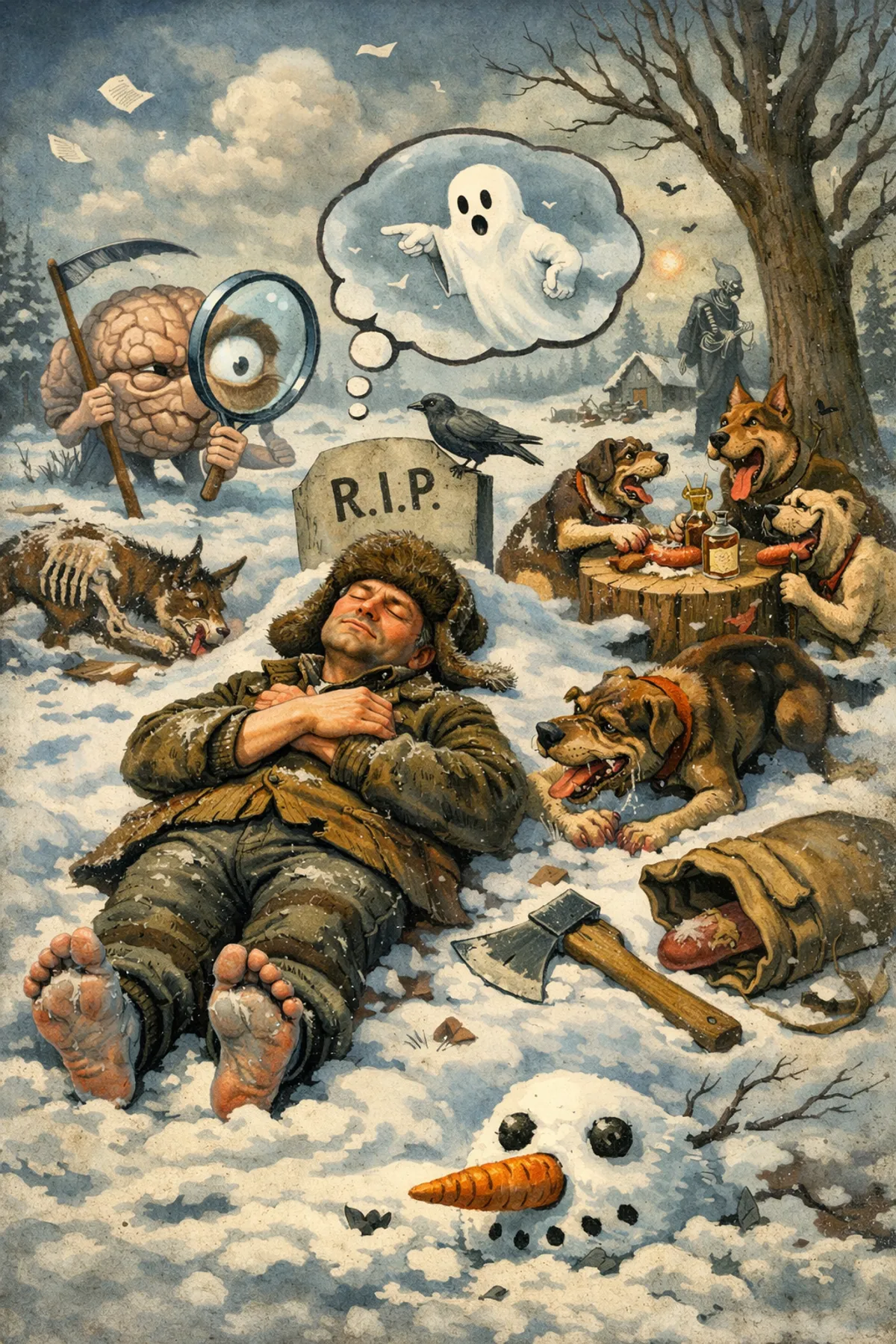
The story begins innocently. An anxious man, a hypochondriac at heart, a philosopher by accident, fears death so intensely that he begins searching for it under a magnifying glass. When you ask too insistently, “Am I dead?”, at some point your brain politely answers:
– Well… it’s possible.
His wife, that last bastion of common sense, gives him a simple criterion: warm = alive, cold = dead. The logic is ironclad, almost scientific, convenient for a person who likes definitive answers. The world is in order. The danger – under control.
Until it starts to snow.
And here the parable does something brilliant: it doesn’t kill its hero immediately. It leaves him to convince himself that it’s over. Cold hands. Cold feet. The conclusion is indisputable. The diagnosis is made by the patient himself. There is no appeal.
And what does a person do who “realizes” that he is dead?
He behaves politely. He doesn’t interfere. He doesn’t get involved. He doesn’t protect his food, his animal, or himself. Because, as he tells himself:
“It’s not right for a dead man to wander through the forest and chop wood.”
This is the moment when the parable is no longer funny but painfully relevant.
How many people live like this?
How many people have given up on love because “that kind of thing isn’t for me”?
How many people watch someone devour the fruits of their labor and think:
“Well, if I weren’t like this, I would have reacted”?
How many people lie in the snow of their own fears while life tears them apart with slobbering jaws?
The dogs in this story are not evil. They are simply reality. Reality always checks whether you move. If you don’t move, it assumes you’re ready.
A person does not die when they are attacked. They die when they decide that they are already dead.
Not when they lose.
But when they accept the loss in advance. Not when it hurts.
But when they decide that the pain is a final sentence. Almаfuerte says, “Do not admit defeat – even if it is so.”
This parable adds something even harsher and more precise:
Do not admit defeat before life has finished with you.
Because life does not have the habit of killing you outright. First it watches you. Then it waits. And if you don’t move… it goes on.
And you?
You’d better make sure you’re still warm.